
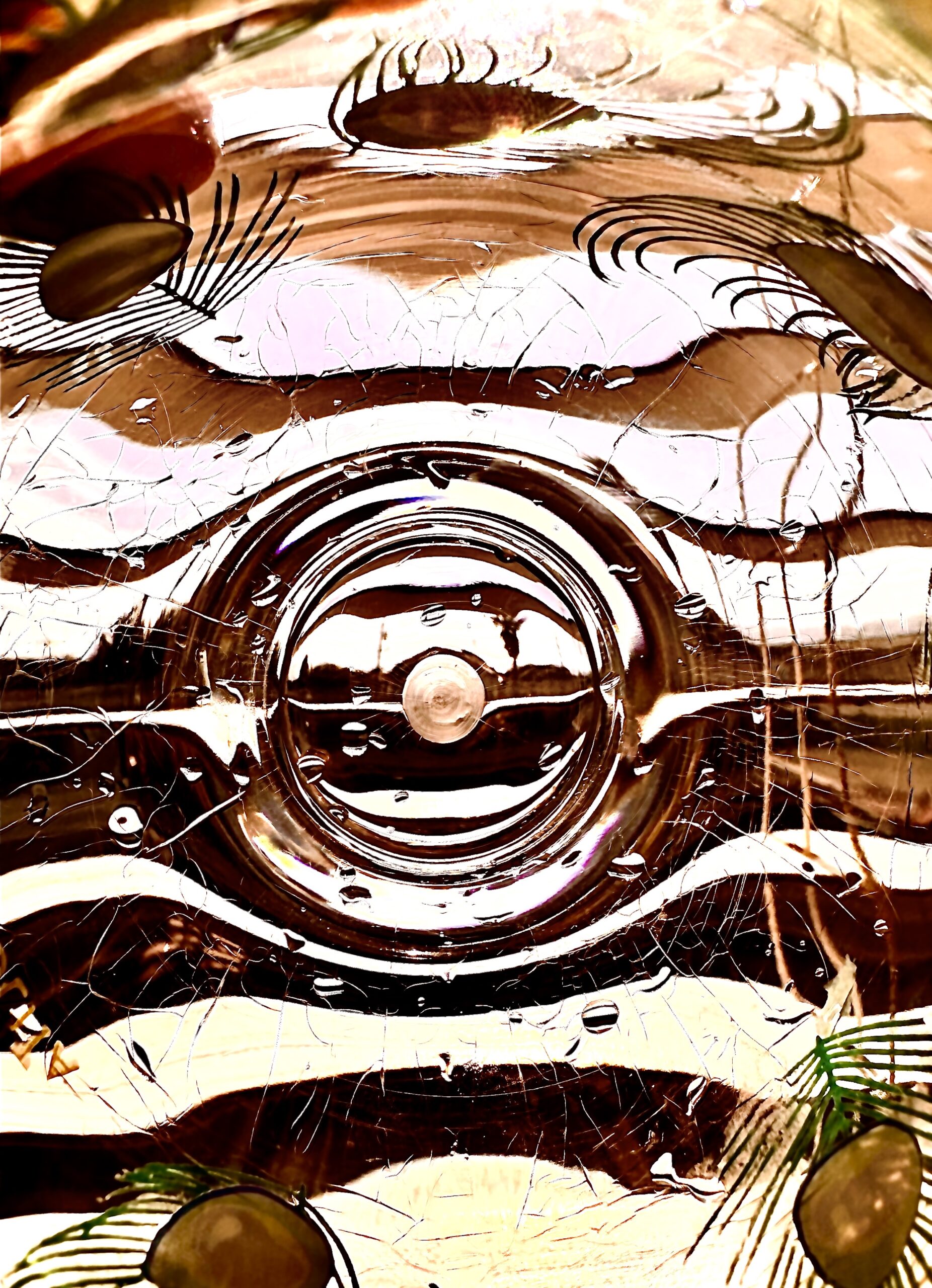
 The radiation oncologist holds up a piece of paper that looks like something used for target practice. Black outline of a human figure, faceless, gender neutral.
You and your father watch as she points to a clump of black squiggles drawn across the figure’s pelvis. “This is the area we treated last time.” She points to a larger clump above, on the figure’s abdomen. “This is where the cancer has spread since then.”
Your father grimaces as he shifts position on the chair next to yours. “What next?”
“We radiate the area, same schedule as before, five days a week for two weeks.”
He nods.
What? Somehow you manage to keep your voice low. “Dad, don’t you remember what happened the last time you had radiation? The side effects? Rectal bleeding? Pain so severe that OxyContin couldn’t touch it?”
Your father shoots you that ‘don’t talk back’ look you remember so well from childhood. “I can take whatever they give out.”
For a moment, the two of you sit in silence, eyes locked. You are the oldest of his five children, the one who lives closest to him, the one your father depends on most since your mother died. Your siblings help when they can. But Joe has a wife and young son. Michael lives out of state. Mary works three jobs. John is disabled.
At first, you didn’t mind. You wanted to be useful, a good daughter. When he was diagnosed with stage 4 cancer, the doctor said it couldn’t be cured, but treatment might keep it at bay for a while. You vowed to support your father’s choices. This was his body, not yours.
You didn’t understand then how aggressive his cancer was, how severe the treatment. When you picked him up for his first chemo session, your father strode down the walkway to meet you. Face ruddy, thick black brows, a shock of white hair. But this morning, he shuffled to your car, bent over a walker. Face grey, eyebrows a shadow, wisps of hair rising from his skull like smoke.
You have a full-time job and a punishing commute. After work, you visit your father at the hospital, or rehab facility, or his apartment to see how he’s doing, if he needs anything. On weekends, you wash his clothes, do his shopping, cook him casseroles. You underestimated how weary you would become as the months dragged on.
Six rounds of chemo, two weeks of radiation, a month in rehab, all those late-night trips to the ER to treat complications. What good has it done? The cancer keeps roaring back.
What you want to say: Dad, you’re 88. Your body is giving out. You can’t take much more.
What you don’t want to admit: You’re 58. Your spirit is giving out. You can’t take much more.
You and your siblings have raised the issue of hospice, which would provide palliative care to ease your father’s suffering. He refuses to consider it. Sometimes, lying awake in bed, you pray that he will have a heart attack, a stroke, something quick to end his misery.
What you don’t want to admit: And your own.
Your father turns back to the radiation oncologist. “Let’s do it.”
He makes it through two treatments. One night, when you call him after work, you hardly recognize his voice. Weak, raspy, slurring words.
You race to his apartment and find him in the bedroom, sprawled on his back across the mattress. A sour locker room smell fills the air. He tries to lift his head but cannot. You fumble for your cell phone and dial 911. As you sit beside him to wait for the ambulance, he rolls over on his side, closes his eyes.
In the distance, a siren wails.
When you were 17, your father taught you how to drive. One day, on a narrow country road, a line of cars formed behind yours, honking at your slowness. Nowhere to pull off. You gripped the steering wheel, breathing hard. “Dad, what should I do?”
He glanced back at the other drivers and shrugged. “Keep driving.”
The siren’s wail becomes louder.
Your father’s breath is ragged. He jolts awake and gazes up at you for a moment. Surprises you with a weak fist bump. “You’re always here when I need you.”
You fist-bump back and say nothing, wanting to believe in this moment that you really are here for him. That when he dies, the relief you feel will not eclipse your grief.
___
Ann MacDonald is a medical writer and graduate of GrubStreet’s Memoir Incubator. She has published essays in The Boston Globe, Cognoscenti, The New York Times, and elsewhere. She’s thrilled that Brevity is her first literary journal publication. With renewed confidence, Ann is revising her memoir. She is using her skills as a medical writer to investigate her mother’s unexpected hospital death while exploring larger issues such as diagnostic uncertainty, power dynamics in hospitals, and efforts to improve patient safety.
Photograph by Sherry Shahan
14 comments
Diana says:
Apr 30, 2026
Thank you, Ann MacDonald, for writing about the mixed emotions that come with caring for an elderly, ailing parent. Your essay made me feel less alone. Thank you.
Jen Thatcher says:
May 1, 2026
Thank you for this beautiful, eloquent piece.
Molly Howes says:
May 2, 2026
Ann, I really appreciate the tenderness in these moments and your courage to face the complexity of mixed feelings. Thank you for sharing this.
Also, I really like your Bio description!
Linda Sweet says:
May 2, 2026
I love the way you ended this piece, revealing the complexity of your feelings. Great descriptions of what it means to be a daughter. Thank you!
Catherine Bourassa says:
May 2, 2026
Ann, what a tender beautiful essay. Being the one closest can be so difficult but also a gift.
Judy Bolton-Fasman says:
May 3, 2026
Ann, so poignant, so true. Thank you.
Ann MacDonald says:
May 4, 2026
Thank you all for your kind words. It was difficult to admit these feelings. I still struggle with wanting to be a hero, but realizing I’m just human.
Margaret Sherrer says:
May 4, 2026
This essay perfectly captures the painful emotions that come with caring for a parent with terminal illness. Love the eloquence and candor of the piece that delivers an arrow straight to the heart.
Susan Harris Howell says:
May 6, 2026
Excellent piece. As I have a mother with Alzheimer’s I know something about your experience, the mixture of grief, fatigue, and prayers for their peace. Thank you for sharing your experience.
Niccole Cyrus says:
May 8, 2026
Thanks for sharing this honest piece. This essay brings back memories during my time as a family caregiver. I wish you much success on your memoir.
Adelina says:
May 13, 2026
Dear Ann, yesterday we read the two versions of this essay during a seminar! Thank you for giving your permission to follow your hard work and the revision process! It was very useful to see how you switched to second person perspective!
Button says:
May 14, 2026
Brilliant, Ann MacDonald! The moments are so vivid and heart wrenching. Congratulations.
Molly Ewan Tomlin says:
May 17, 2026
Thank you for sharing your experience and mentioning all the emotions with long-term caregiving
Dwjalil says:
Aug 4, 2026
Thanks for sharing this honest piece. This essay brings back memories during my time as a family caregiver. I wish you much success on your memoir.